
How does Mistral want Vibe to remember work without overloading chat?
Mistral is turning Vibe into a unified work surface with editable knowledge pages and spreadsheet workflows. What does that change?
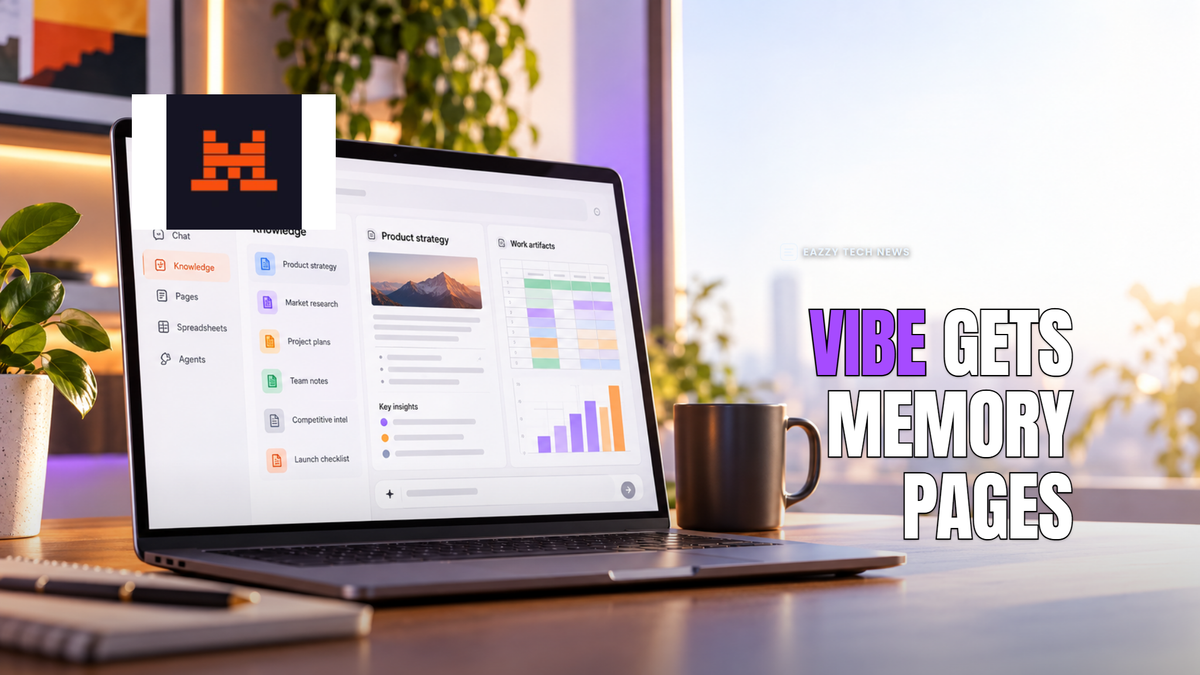
Mistral has merged its Chat and Work surfaces into a single Vibe experience and added an Agentic Knowledge Base that the company says can retrieve personal context only when it is semantically relevant.
The September 22 release notes describe three linked changes: a simpler Vibe interface, an agent-maintained knowledge base, and spreadsheet generation inside Vibe Work. Together, they show Mistral moving its assistant from a chat window toward a work surface that can carry context across sessions, create editable mini apps and handle structured files.
What changed in Vibe?
The clearest product change is navigation. Mistral says Chat and Work are becoming one Vibe experience, so users can ask questions or start tasks from the same place instead of choosing a separate mode before they know what the task needs.
The Agentic Knowledge Base is the more consequential claim. Mistral says Vibe Work now builds and maintains structured personal pages rather than forcing every saved memory into every answer. The practical promise is narrower and more useful than a generic memory feature: the assistant should retrieve background facts when they matter and leave them out when they do not.
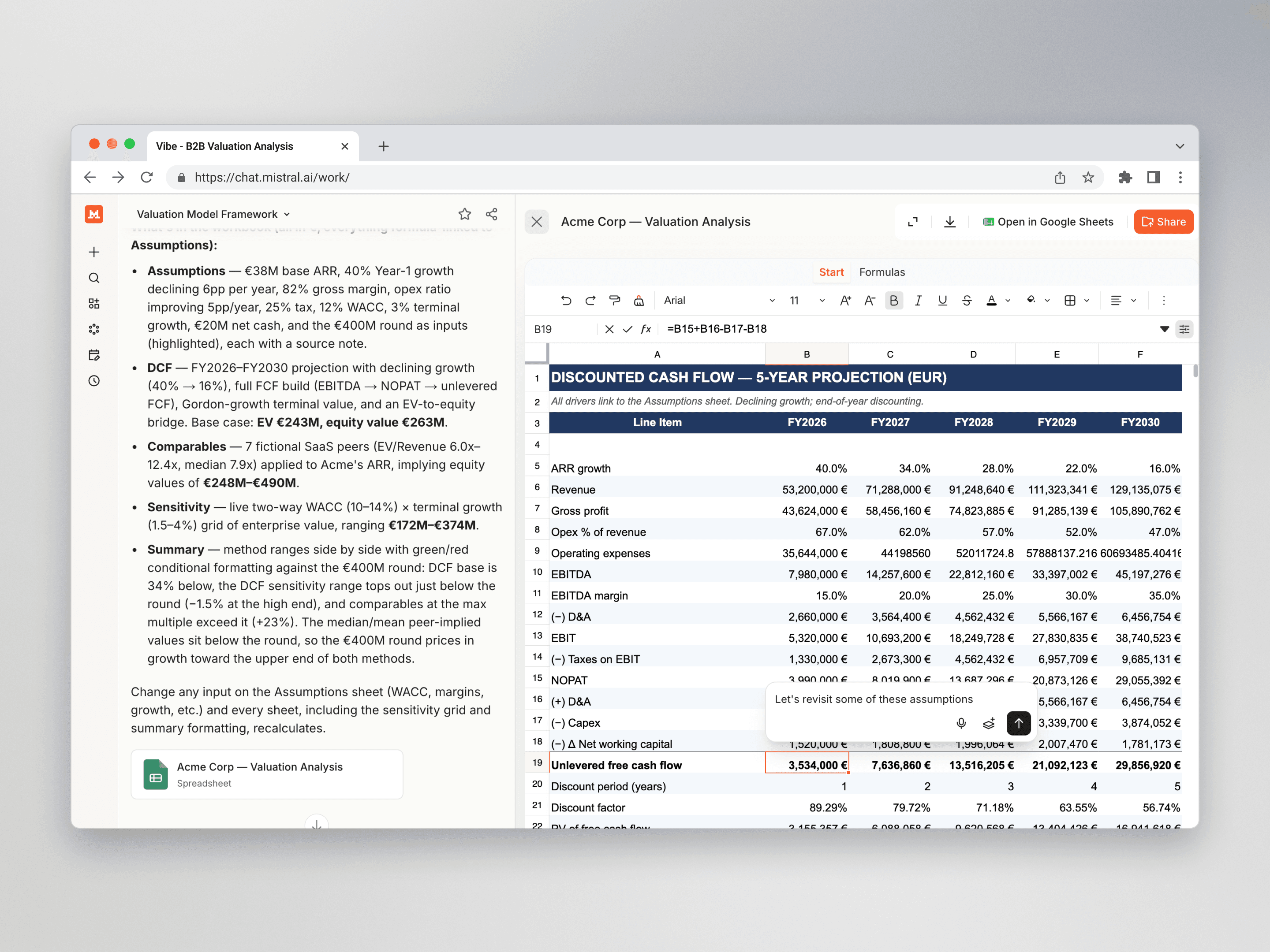
The release notes also say Vibe Work can upload a workbook or build a tracker from a description, then analyze, clean or transform the data through follow-up prompts. That puts spreadsheets beside mini apps and knowledge pages as first-class work objects in the Vibe surface.
| Vibe update | What Mistral says it does | What remains to verify |
|---|---|---|
| Unified Vibe experience | Combines chat and work entry points into one place. | Whether the simpler interface reduces task friction for real users. |
| Agentic Knowledge Base | Builds editable personal pages and retrieves relevant context when needed. | How reliably the system decides what context is relevant or intrusive. |
| Spreadsheet workflows | Creates, analyzes, cleans and transforms workbook-style data. | Accuracy on messy files, formulas, provenance and business-critical numbers. |
Why does the knowledge base matter?
Assistant memory is useful only if it improves the current task. A memory system that inserts irrelevant personal or project facts can make an answer worse. Mistral's framing acknowledges that risk by describing a structured knowledge base that users can browse, edit and trust, instead of a flat memory store hidden behind the model.
That distinction matters for long-running work. A user may want an assistant to remember a company's assumptions, preferred formats, project constraints or prior decisions. The same user may not want that material injected into unrelated questions. Vibe's claim is that retrieval should depend on semantic need, not on the mere existence of a stored note.
What should teams watch?
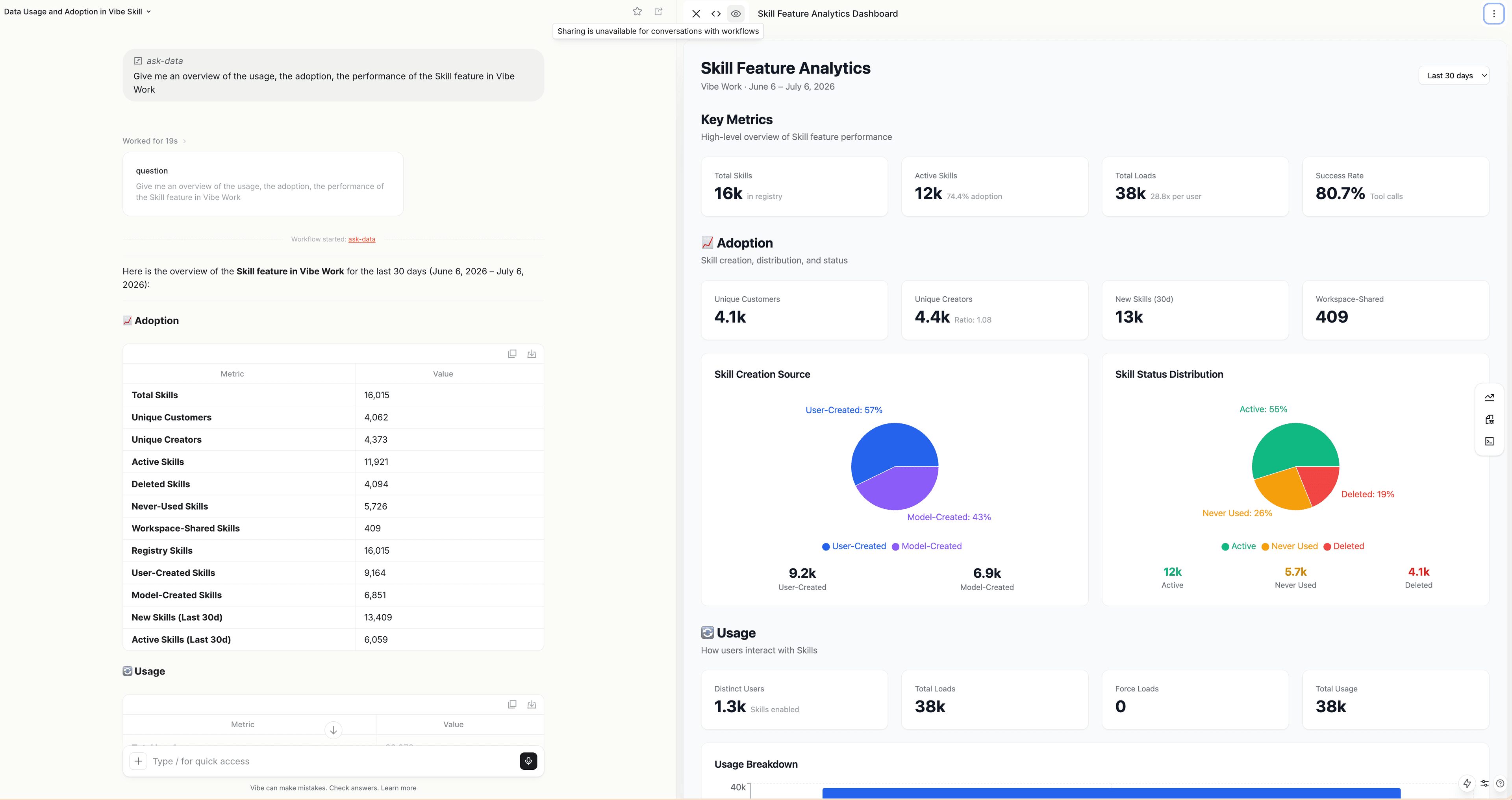
The release notes do not establish that Vibe can safely manage every business workflow. They establish availability and intent, not independent performance. Teams considering the feature should test three things before relying on it for important work.
- Check whether the knowledge base records facts accurately and exposes enough editing control.
- Test whether retrieval stays relevant across unrelated tasks, especially when projects share similar vocabulary.
- Validate generated spreadsheets with known inputs, formula checks and source notes before using the numbers.
The direction is still significant. Mistral is treating the assistant as a workspace that manages context, files and generated artifacts, rather than a model that only answers prompts. If the knowledge base works as described, the value is controlled recall: better judgment about when saved context should appear. Mistral's broader product updates are listed on its news page.



Comments ()