
UK AI-health report calls for patient notice and opt-outs
A UK Commission report asks healthcare organisations to give patients clearer notice of AI use and an opt-out where practical.

A UK commission on AI in healthcare has called for a system-wide approach that tells patients when AI is used in their care and gives them an opt-out where that is possible or appropriate.
The National Commission into the Regulation of AI in Healthcare published 40 recommendations on September 10. Its advice reaches beyond medical-device approval into the responsibilities of hospitals, clinicians, developers, regulators and the health systems across the UK.
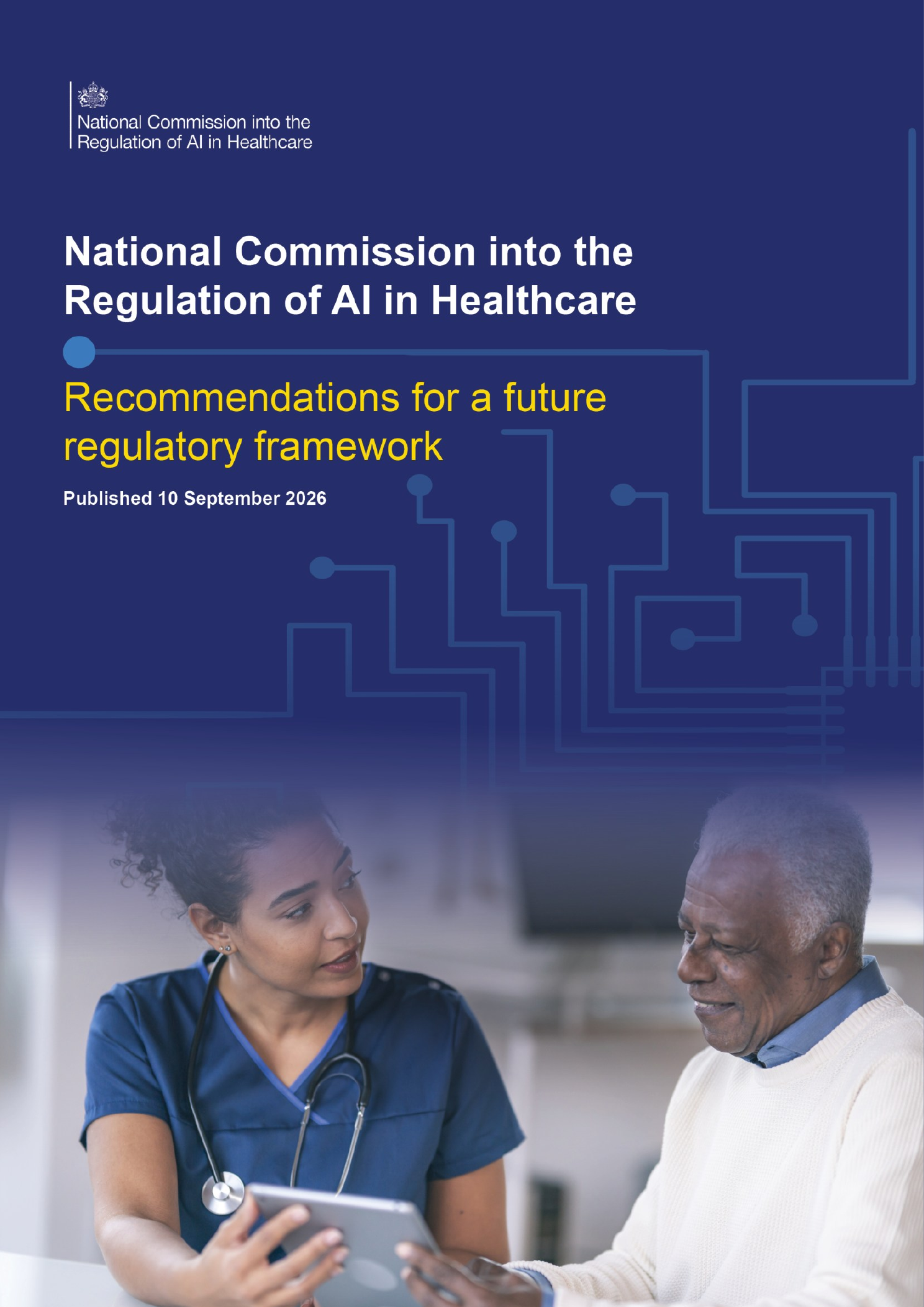
Recommendation 35 says healthcare organisations should use proportionate, system-level transparency about AI-enabled products in patient care. It says that approach should address patients' reasonable expectation of being informed and their ability to opt out where practical. The report says a universal requirement to tell every patient about every AI use does not exist under the current framework.
The distinction matters because healthcare AI can range from administrative software to clinical decision support and consumer products. The Commission argues that disclosure cannot depend solely on a clinician deciding, during each appointment, whether to explain an AI tool. It proposes a baseline of public awareness, with more detailed discussion for high-risk, sensitive or novel uses.
The recommendations are advice, not new law. A June parliamentary answer described the Commission as an advisory body whose recommendations were not pre-decided. The MHRA said a cross-government response will follow, and the report assigns actions to the MHRA, the Department of Health and Social Care, devolved health departments, providers and other bodies. Whether any recommendation becomes a binding obligation will depend on those later decisions.
Several proposals would make the record around a tool easier to inspect. The Commission asks for information on intended use, limitations, performance across subgroups, updates and reporting routes. It also recommends public-facing safety information and clearer routes for patients to raise concerns or seek redress when care falls below a reasonable standard.
The report also backs staged authorisations for some AI-enabled devices, with defined paths to full approval and stronger real-world evidence after deployment. That is an attempt to address a practical weakness of one-time pre-market review for software that may change after it reaches a clinic. The report does not say which products would qualify or how regulators would measure performance in every setting.
The Commission's own evidence gathering, published in June, included public deliberation, an open call for evidence and engagement with health professionals, industry and patient groups. That process supports the report's account of the concerns it heard; it does not establish that the government will adopt every proposed safeguard.
The next concrete test is the government's response. For patients and providers, the central issue is whether disclosure, monitoring and accountability become common operating rules rather than recommendations that vary from one organisation to another.



Comments ()