
NASA finds early Mars water was messier than one shoreline
NASA and JPL say Perseverance observations reveal complex early-Mars water systems, sharpening where scientists look for habitable environments.
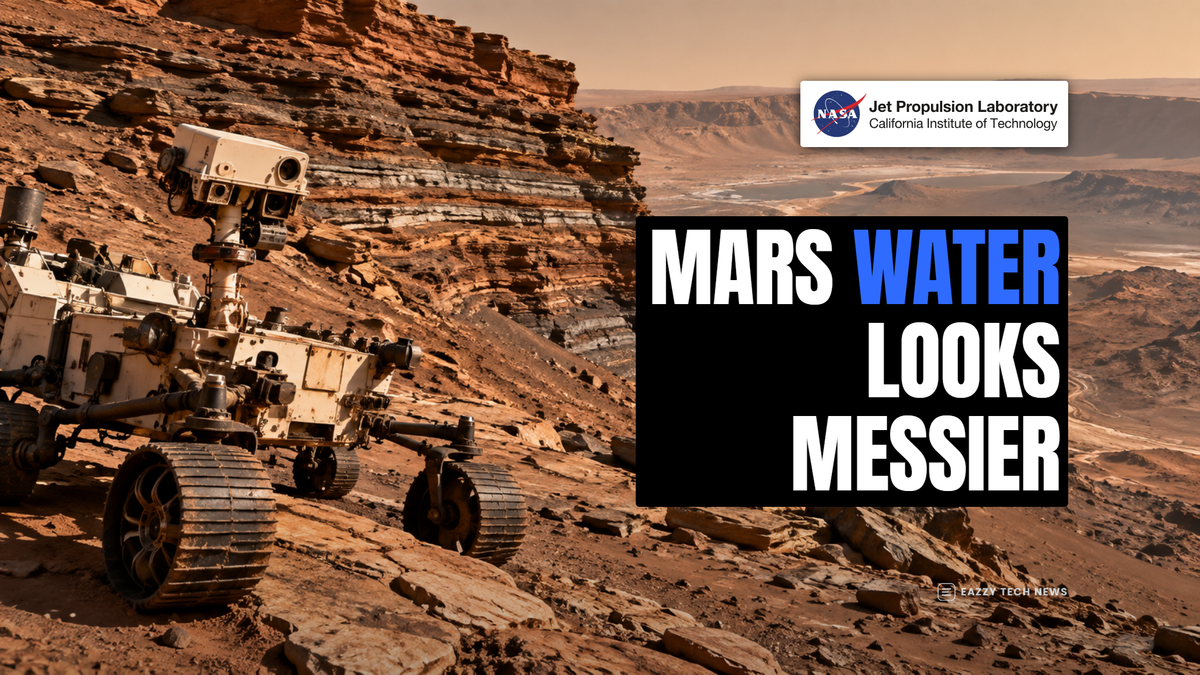
NASA's latest Mars discovery makes the planet's early water story look less like one clean shoreline and more like a layered system of changing environments.
The agency's Jet Propulsion Laboratory reported on September 21 that observations tied to Perseverance's work around Jezero crater point to complex water systems on early Mars. The practical consequence is simple: scientists do not get to treat one ancient lake margin as the whole story. The rover is reading a place where water appears to have changed over time, leaving different kinds of deposits for instruments and eventual sample analysis to compare.
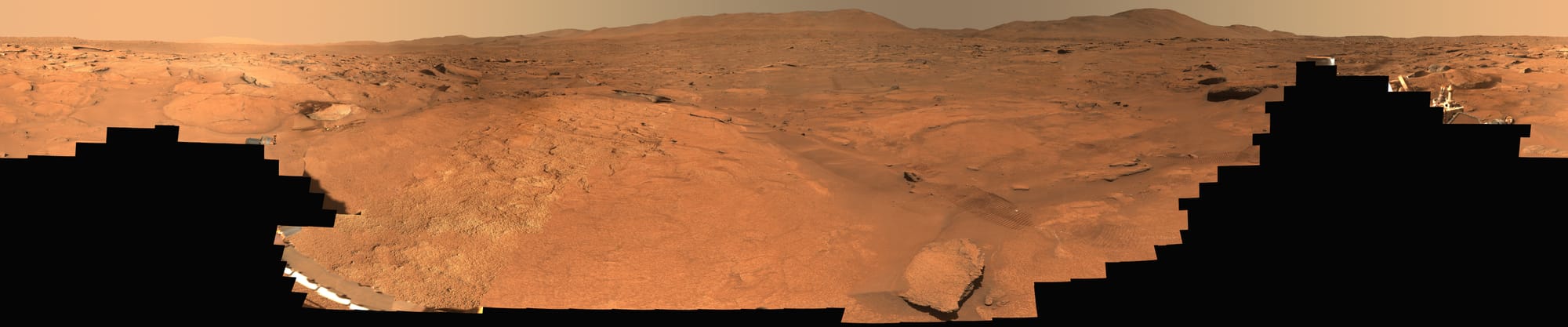
Why the Margin Unit matters
Jezero crater already mattered because it once held a lake and river delta. The new value is more specific. Perseverance has been working through the crater rim and the Margin Unit, where rock layers can preserve clues about water chemistry, duration and habitability. If those layers formed in different water settings, each layer becomes a separate line of evidence rather than a repeat of the same lake story.
That changes how mission teams read samples. A rock altered by one long-lived lake can tell a different story from a rock touched by groundwater, flowing channels or repeated wet-dry cycles. The science question now focuses on what kind of water system existed, how long it persisted, and whether any of those settings could have preserved organic material or other biosignature clues.
That distinction is easy to miss in headline form. "Water on Mars" is old news. "Which water environment left this rock record?" is the harder mission question.
The technology angle is context, not hype
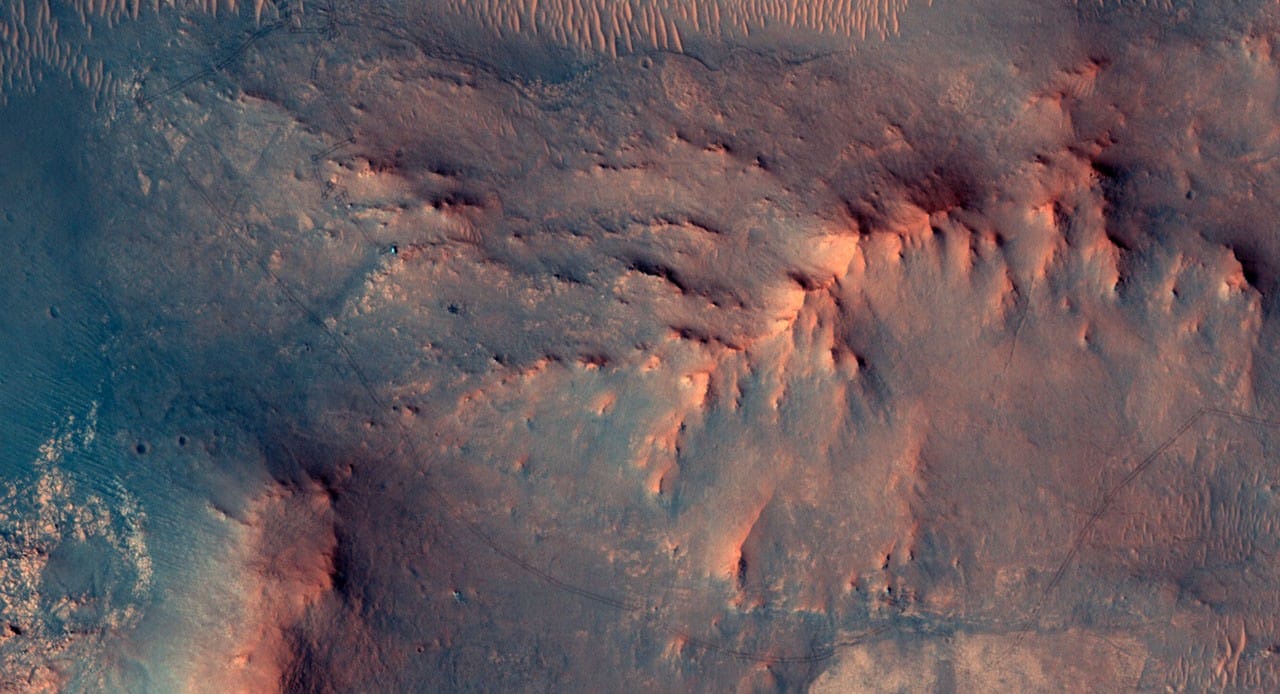
This is a space-technology story because the discovery depends on rover mobility, orbital imaging and instrument context working together. Perseverance's cameras, navigation and sampling strategy let scientists tie a close-up rock target to a broader geologic setting. HiRISE, the high-resolution camera on NASA's Mars Reconnaissance Orbiter, gives the overhead route view that helps place the rover's work in the landscape.
The rover is building a chain of context:
- Orbital imaging maps the route and terrain relationships.
- Rover cameras show the outcrops and layers at human scale.
- Onboard instruments connect texture and chemistry to possible formation environments.
- Sample selection preserves material that may later be studied with Earth laboratories.
That chain matters because Mars sample interpretation can fail if the context is wrong. A sample's value depends on what it contains, where it formed, what changed it and how it relates to nearby layers.
The caution is that this is still interpretation, not a direct detection of life. Complex water systems make Jezero scientifically richer, but they do not prove biology. They tell mission scientists where to look harder and how to compare environments that may have been more varied than a single lake-margin model suggests.
For readers watching the investment and engineering side of space, the lesson is also broader. Planetary missions create value slowly, by stacking measurements across years. A 2026 discovery can depend on images captured in 2023, orbital context from another spacecraft and a rover route built one drive at a time. That is the work behind the headline: a machine-readable field record of a planet that used to be wetter, stranger and harder to summarize.



Comments ()