
NASA buys three more SpaceX crew flights
NASA awarded SpaceX three additional ISS crew-rotation missions through a $946 million CCtCap modification covering Crew-15 through Crew-17.
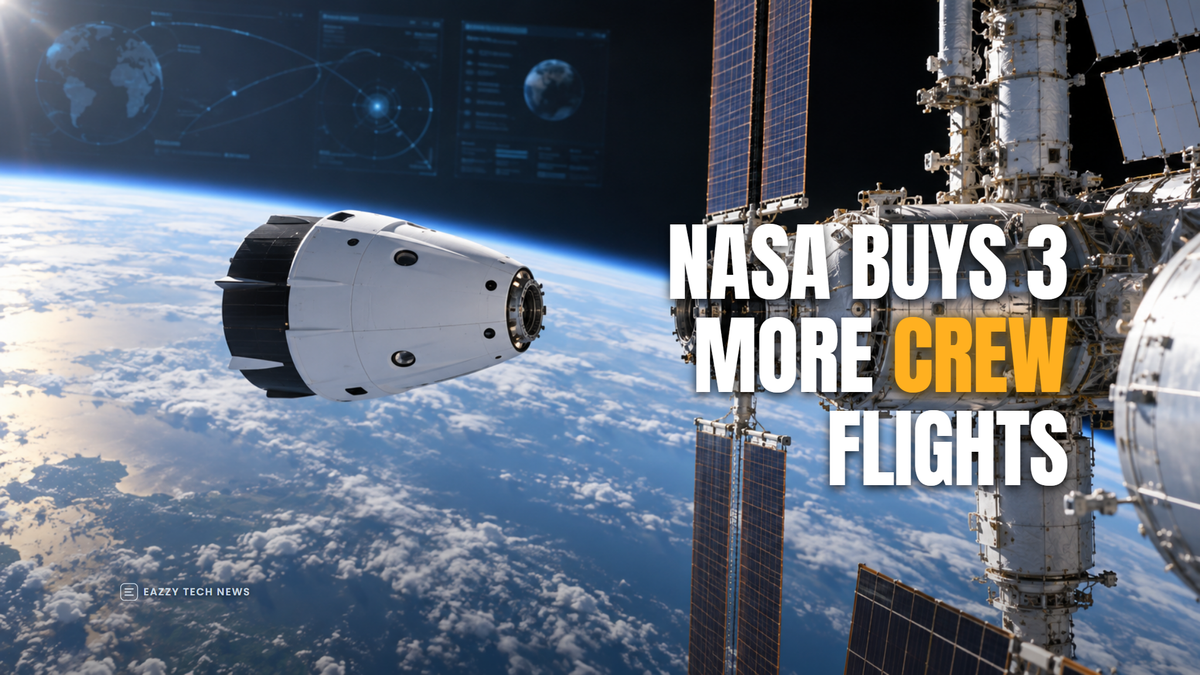
NASA has awarded SpaceX three additional astronaut-transport missions to the International Space Station, adding Crew-15, Crew-16 and Crew-17 through a $946 million contract modification that keeps Dragon flights in the station plan through 2030.
The September 18 NASA award notice says the added work sits under the agency's Commercial Crew Transportation Capability contract, known as CCtCap. The modification brings SpaceX's total NASA crew-rotation missions to 17 and raises the total CCtCap value with SpaceX to $5.92 billion.
The practical point is continuity. NASA says the new missions help it maintain access to the space station with two separate commercial crew providers. The agency had issued a May notice of intent to buy the added SpaceX missions, and the September award turns that plan into a contract modification.
What NASA bought
This is a firm fixed-price, indefinite-delivery/indefinite-quantity contract modification. Plainly, that means NASA is setting the price and ordering defined mission services under an existing contract vehicle instead of announcing a brand-new launch program.
| Part of the award | NASA's supported detail | Important limit |
|---|---|---|
| Missions | Crew-15, Crew-16 and Crew-17 to the International Space Station. | The award is for future crew rotations, not a launch this week. |
| Value | $946 million for the three missions and related mission services. | The figure is a contract modification value, not SpaceX revenue guidance. |
| Services | Ground, launch, in-orbit, return and recovery operations, cargo transportation and docked lifeboat capability. | NASA did not describe a new Dragon vehicle design in the award notice. |
| Timing | Mission readiness dates in 2027 and 2028, with period of performance through 2030. | Readiness dates are planning milestones, not guaranteed launch dates. |
NASA's notice says each SpaceX mission uses Dragon and Falcon 9 to transport up to four astronauts plus critical cargo to the station. It also says SpaceX was certified by NASA for crew transportation in November 2020, which matters because this modification buys more service under an already certified system rather than starting certification from scratch.
Why the modification matters
The International Space Station still needs regular crew handovers, cargo capacity and emergency return capability while docked. NASA's added SpaceX missions are a way to preserve that operating rhythm while the station approaches the end of the decade.
The award also reveals how NASA is managing provider risk. Boeing and SpaceX both received CCtCap awards in 2014 through the Commercial Crew Program. SpaceX has flown operational crew rotations since certification, while Boeing's Starliner path has taken longer. NASA does not say in the September notice that it is abandoning the two-provider model. It says the added SpaceX missions help maintain access with two unique commercial crew industry partners.
For SpaceX, the new work extends a mature NASA service line rather than creating a surprise new business. The contract value is large, but the scope is concrete: astronaut transport, cargo, in-orbit support, return, recovery and lifeboat coverage while Dragon is attached to the station.
What to watch next
The next evidence to watch is mission assignment and schedule detail for Crew-15, Crew-16 and Crew-17. NASA has identified readiness years, but the actual launch dates, crew assignments, vehicle processing milestones and station-traffic dependencies will determine how the added missions fit into the final ISS years.
The award is also a reminder that commercial space contracts are not only about headline launches. Much of the value sits in the operational layer around them: recovery teams, cargo planning, docked emergency-return capability and the schedule margin needed to keep astronauts rotating without a gap.


Comments ()